
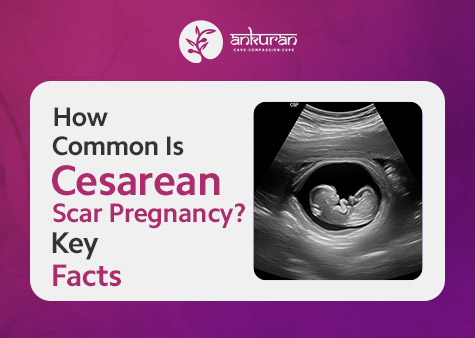
What is a Scar Pregnancy?
Cesarean scar pregnancy (CSP) is a rare type of ectopic pregnancy in which the embryo attaches itself to the scar tissue left from a previous cesarean delivery, rather than the endometrial lining of the uterus. This abnormal implantation disrupts the normal placental development and poses serious risks to the uterus, surrounding organs, and maternal health.
CSP accounts for approximately 1 in 1,800 to 1 in 2,500 pregnancies, and its incidence is steadily rising in parallel with the global increase in cesarean delivery rates. As reported by the World Health Organisation, over 21% of births around the globe are now delivered via cesarean section.
Read More:
What are the Symptoms of a CSP Pregnancy?
Symptoms of cesarean scar pregnancy can be subtle or mimic a normal early pregnancy, which is why CSP is often misdiagnosed. Common symptoms include:
- Light vaginal bleeding in early pregnancy
- Pelvic or lower abdominal pain
- A confirmed pregnancy test result with no evidence of a pregnancy inside the uterus
- An empty uterus during a transvaginal ultrasound
If left undetected, scar pregnancy abortion, or rupture may occur, which can be life-threatening. Women who have had a cesarean delivery and exhibit these symptoms should receive immediate evaluation through a scar pregnancy ultrasound (USG).
Spotting early signs of CSP? Don’t wait
Consult our Experts Today
What is a Type 2 Cesarean Scar Pregnancy?
CSP is classified into two types:
- Type 1 (Endogenic): The pregnancy grows into the uterine cavity.
- Type 2 (Exogenic): The pregnancy grows deeper into the myometrium and toward the bladder.
Type 2 cesarean scar pregnancy is more dangerous as it increases the risk of uterine rupture and internal bleeding. It requires immediate medical intervention and may involve more complex scar pregnancy treatment, such as surgical removal or uterine artery embolization.
What is the Normal Range of CSP?
There is no “normal” measurement for CSP as it is an abnormal pregnancy. However, certain criteria in scar pregnancy USG are used to identify and monitor CSP:
- Empty uterine and cervical canals
- The gestational sac is located in the anterior lower uterine segment.
- Minimal myometrial thickness between the sac and bladder (<3 mm)
A thin residual myometrial layer (<2 mm) at the scar site is concerning and may suggest a higher risk of rupture.
What is the Normal CSP Measure for 23 Weeks?
By 23 weeks, a viable c scar pregnancy is extremely rare, as most CSP cases are detected and treated in the first trimester. If undiagnosed, the pregnancy may evolve into placenta accreta spectrum disorders, such as placenta increta or percreta, which can severely complicate the pregnancy and delivery process.
There is no standard CSP measurement at 23 weeks since most cases require scar pregnancy abortion or medical termination long before this stage due to the associated risks.
Is Scar Pregnancy Dangerous for You and Your Baby?
Yes, scar pregnancy is considered high-risk for both the mother and fetus. Complications include:
What are the Outcomes of Scar Pregnancy?
- Uterine rupture
- Heavy bleeding requiring blood transfusion
- Hysterectomy
- Loss of future fertility
- Maternal morbidity or mortality
What is the Success Rate of Scar Pregnancy?
The success of cesarean scar pregnancy treatment depends on early diagnosis and prompt medical intervention. According to PubMed Central journal report published in the National Library of Medicine:
The success rates of scar pregnancy treatment are
Type 1 Cesarean scar pregnancy
- Dilation and Curettage (D&C): 95% primary success rate.
- Uterine Artery Embolization (UAE): 100% primary success rate.
- Hysteroscopy with laparoscopy: 100% primary success rate.
Type 2 Cesarean scar pregnancy
- D&C: 27% primary success rate.
- UAE: 67% primary success rate.
- Hysteroscopy with laparoscopy: 95% primary success rate.
Studies indicate that combining hysteroscopy with laparoscopy offers the highest success rate for managing Type 2 CSP, whereas dilation and curettage (D&C) may serve as a more affordable approach for treating Type 1 CSP.
How Often Does Scar Pregnancy Occur?
Though rare, cesarean scar pregnancy cases are increasing due to the rising global C-section rates. A study published by BMC Pregnancy and Childbirth revealed that the rate of cesarean deliveries in India has shown a significant upward trend over time17.2% in 2016 to 21.5% in 2021. In the private sector, nearly one in two deliveries was a Cesarean section in 2021. This increase in Cesarean deliveries is likely to contribute to a rise in the incidence of CSP in India, consistent with the global trend. However, specific data on the prevalence of CSP in the Indian context is limited, but it is considered a rare but serious complication. It is important for healthcare providers to be aware of this condition and its risk factors to ensure early detection and management.
How to Prevent Cesarean Scar Pregnancy?
While CSP can’t be entirely prevented, you can reduce your risk with the following precautions:
- Avoid unnecessary C-sections to reduce scar formation.
- Allow adequate healing time between pregnancies (at least 12–18 months).
- Seek early prenatal care and a transvaginal ultrasound if you have a history of C-sections.
- Discuss any uterine surgeries with your OB-GYN before conception.
How to Diagnose CSP?
Early and accurate diagnosis is key to safe scar pregnancy treatment. A scar pregnancy USG is the first-line diagnostic tool, preferably a transvaginal scan. Diagnosis is based on:
- An empty uterine cavity and cervical canal
- Gestational sac embedded in the scar.
- Minimal myometrial thickness between the sac and the bladder
In some cases, MRI may be used to confirm the diagnosis and evaluate the depth of invasion.
Can CSP Be Missed on Ultrasound?
Yes. CSP can be missed on ultrasound, particularly in very early gestation or if the sonographer is not familiar with CSP criteria. Studies suggest that misdiagnosis or delayed diagnosis occurs in up to 40% of CSP cases, which increases the risk of complications such as rupture or emergency hysterectomy.
Therefore, women with a history of cesarean delivery should always request an early scan to rule out scar implantation.
Final Thoughts
Though rare, scar pregnancy is a serious condition that requires immediate attention. If you have a history of cesarean section and are planning a pregnancy or are already pregnant, early and targeted scar pregnancy USG can help detect and manage this complication timely manner. Awareness, early diagnosis, and expert care can significantly improve outcomes.
At Ankuran IVF Clinic, we specialize in handling complex fertility concerns, including high-risk cases like cesarean scar pregnancy. With advanced diagnostic tools, personalized care plans, our team ensures safe monitoring and effective treatment from the very first step. If you’re concerned about scar pregnancy or looking for expert fertility care, Ankuran is here to support your journey with compassion and clinical excellence.


No Comments